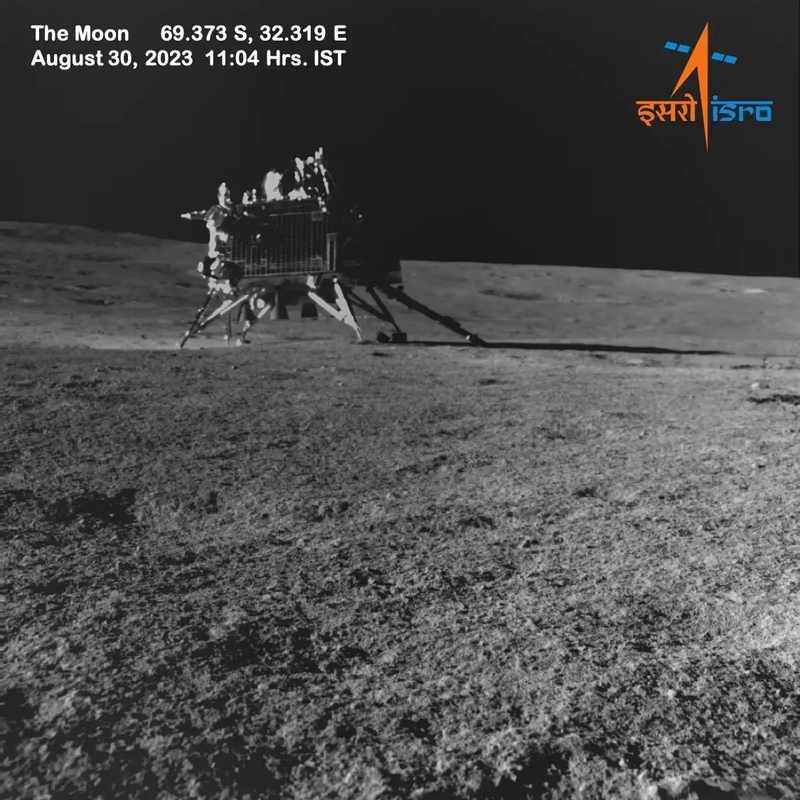

Indian Lunar Lander Takes a Selfie
Baby Steps
India’s shot at Moon occurs in measured and scheduled steps through its Chandrayaan programme. The name Chandrayaan literally translates to ‘Moon-craft’. It occurs in about one and half decade. Start of this is marked by succesful Chandrayaan-1 mission which was just an orbiter around the Moon. The most succesful outcome of which is some of the most concrete evidence of water molecules on the surface of the Moon [1]. Buoyed by the success of the orbiter the Indian Space Research Organization (ISRO) set its goal to launch a lunar lander - Chandrayaan-2.
Sprint
This was a composite design consisting of orbiter, lander, and a rover. The latter two were affectionately named Vikram (lit. ‘valour’ and also the name of the founder of the Indian space programme) and Pragyaan (lit. ‘wisdom’), respectively. Roughly a decade after the previous mission, the Moon craft attempted a landing but unfortunately crashed due to the issues that ocurred during the final 2 km of the descent [more details]. The silver lining was that the orbiter placed one of the best set of eyes (camera) around the Moon in recent years. See some of the clearest images of the Apollo landing sites imaged by the orbiter with added explanation here.
Photo finish
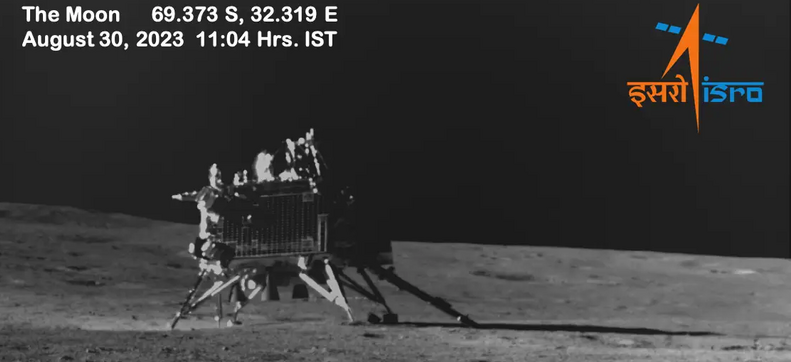
Although crash landed, the 2nd mission was able to succesfully demonstrate many new capabilities. After detailed analysis and redesign another attempt was made at lunar landing by next mission Chandrayaan-3. This was a successful landing. Furthermore, the landing spot was the southern than any lander had ever ventured on the surface of the Moon. After confirmed landing and some amount of wait the rover rolled out onto the surface of the Moon and took the image of the lander. I consider this image iconic and one that space enthusists from India would remember for a long time.